The University of Alabama at Birmingham Athletics
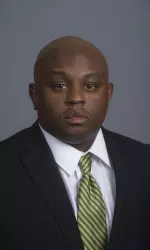
Brian Williams' coaching career shaped by Miami roots
4/8/2016 12:00:00 AM | Football
Brian Williams was the defensive coordinator for a state high school championship team in Florida and earned a national championship ring as part of the Florida State University staff in 2013. Still, some of his most special football moments came on the fields near his childhood home in Miami.
“Football was almost like a way of life there,” Williams said. “The culture in Miami, you pretty much play football before you can walk and dang near before you can talk. It’s very competitive there — from the little league ranks on up.”
Williams was surrounded by talent from the moment he stepped on the football field. One of his closest childhood friends — Santana Moss — became an All-American receiver at the University of Miami and spent 13 seasons in the NFL. Many of Williams’ teammates at Miami Carol City High School received scholarships to play at Miami and Florida State, which were perennial Top 5 programs at the time.
“I can say that I grew up around and played with a lot of great athletes, superior athletes, who were far more athletic than I was,” Williams said. “I think that’s where my love for learning the game of football started. In order for me to compete with those guys, I had to study the game more. I had to take a different approach to measure up because I didn’t athletically.”
He became a standout high school player under legendary Florida high school coach Walt Frazier. Williams earned a scholarship to Albany State University, where he played before transferring to Florida A&M University. Injuries cost Williams an opportunity to play at Florida A&M, but he transitioned quickly into the coaching world.
No one had a bigger impact on that decision than Frazier, who turned Miami Carol City High School into a prep football power in Florida. Frazier compiled a 212-111 record and won three state titles in a 26-year tenure at the school. For many of his players, including Williams, he was more than just a coach.
“I wanted to get into coaching because of him, and I wanted to be a high school coach because of him,” Williams said. “Everything he taught us in high school and coming up just opened my eyes up to a lot of different things and different perspectives. Definitely, he had the biggest impact on me as a coach and as a man.”
Williams spent two seasons at Rickards High in Tallahassee while finishing college. Afterward, he returned to his high school alma mater, where he coached football and taught math and special education for the next seven years. He spent one year at a Georgia high school before beginning a three-year stop at Godby High School in Tallahassee as the defensive coordinator under former college coach Ronnie Cottrell. His time at Godby ended with a state championship in 2012.
His coaching career transitioned into college the following year. Williams was a defensive analyst for Florida State teams that won 29 consecutive games and captured the 2013 national championship. Last year, he worked as player relations coordinator for the University of Georgia defense.
Williams’ path to UAB began with a friendship he developed with Bill Clark when the UAB head coach was the defensive coordinator at South Alabama. Williams, who was at Godby High at the time, often visited to learn from Clark, and he brought some of his players to camps at South Alabama. Williams also forged a friendship with current UAB defensive coordinator Duwan Walker, who served under Clark at Prattville High and was also with Clark at South Alabama and Jacksonville State.
Williams is coming off his first spring practice as the Blazers’ linebacker coach. Like every other coach, newcomers and holdovers from the 2014 staff alike, he is getting to know his current personnel while waiting for the next group of recruits to join the program this summer.
“We stick to the script of who we are, and that’s part of the reason I took this opportunity to come here,” Williams said. “It’s because of who I’m with and what they believe in. If you’re doing things this way, it doesn’t matter when you play, who you play or where you’re playing them. You just have to go about business the right way. What’s important is developing these guys and getting them to a point where they’re becoming college graduates. Football will take care of itself.”